If you are responsible for packaged products, you know that even a minor drop in freshness or an unexpected leak can cost more than profit. These errors can chip away at your brand reputation and reduce customer trust.
Modified atmosphere packaging (MAP) has revolutionized product longevity and integrity by offering a smart, adaptable shield against time and the elements. MAP replaces the oxygen-laden ambient air within a sealed pack with a carefully engineered mix of protective gases. With the proper techniques, this process extends shelf life, preserves color, protects flavor, maintains texture, and keeps products safely within regulatory bounds.
The secret to ensuring success is mastering the four pillars of MAP: gas composition, equipment performance, barrier film compatibility and quality control.
Pillar 1: Precise Gas Composition and Residual Oxygen Targets
Everything starts with the right air or the right absence of air. Every product demands its own headspace parameters. For example, for coffee, you will need extremely low levels of residual oxygen to lock in freshness. Alternatively, for red meat, a high-oxygen mix preserves color, while carbon dioxide inhibits bacterial growth. Furthermore, nitrogen can act as a stable, inert filler to cushion fragile items and displace oxygen that would otherwise speed spoilage. This is the essence of MAP and gas flush packaging.
However, gas variation can become a pitfall. A fraction of a percent variance in residual oxygen is enough to spoil products inside their packaging. This error can result from uneven flushing cycles, weak vacuum performance or leaky seals. Ensuring tight targets and consistent delivery is nonnegotiable, and maintaining specific recipes for each product is the first pillar of MAP success.
Pillar 2: Equipment Performance and Vacuum Integrity
Think of your MAP packaging equipment as the heart of the operation. If it falters, every other step becomes compromised. Residual air pockets can result in gas variation. High-performance nozzle systems are necessary to evacuate nearly every molecule of oxygen before the gas flush. Precision is key, as inconsistency in vacuum or injection cycles means inconsistency in product shelf life.
Additionally, the process must be replicable. MAP packaging equipment should consistently complete the exact same vacuum and gas flush sequence. Cycle-to-cycle consistency guarantees your entire production lot meets the promised shelf life. If you are seeking gas flush packaging equipment that delivers trustworthy performance, this is where investment in the right system pays dividends.
Furthermore, even the most advanced MAP equipment needs proper maintenance and use. Operators must have the necessary training to be able to run the machine, achieve correct vacuum levels and verify the seals are tight after each run. Proper calibration is also critical. Sensors and gauges that track vacuum levels, gas flows or seal temperatures can drift out of specification over time. Scheduled calibration ensures the operator is working with accurate equipment feedback and that the system can perform within tight, reliable tolerances for each batch.
Pillar 3: Barrier Film Compatibility and Permeability
Without protection and containment, a perfect atmosphere is pointless. This is where many MAP efforts quietly fail. Traditional polyethylene films, though inexpensive and versatile, often have high oxygen transmission rates, making them unusable for most MAP applications. Instead, multi-layer structures incorporate materials like EVOH for gas resistance or metallized films for even greater protection. These structures are necessary to tailor oxygen and moisture permeability to your product's needs.
The film's sealant layer must also be robust enough to withstand the realities of a busy factory. For example, oil, dust and food debris and sneak between seal layers, compromising the barrier. A robust sealant layer must be able to create a truly protective package even in less-than-sterile environments. This compatibility check is a daily line challenge for many operators.
Pillar 4: Quality Control and Validatable Sealing
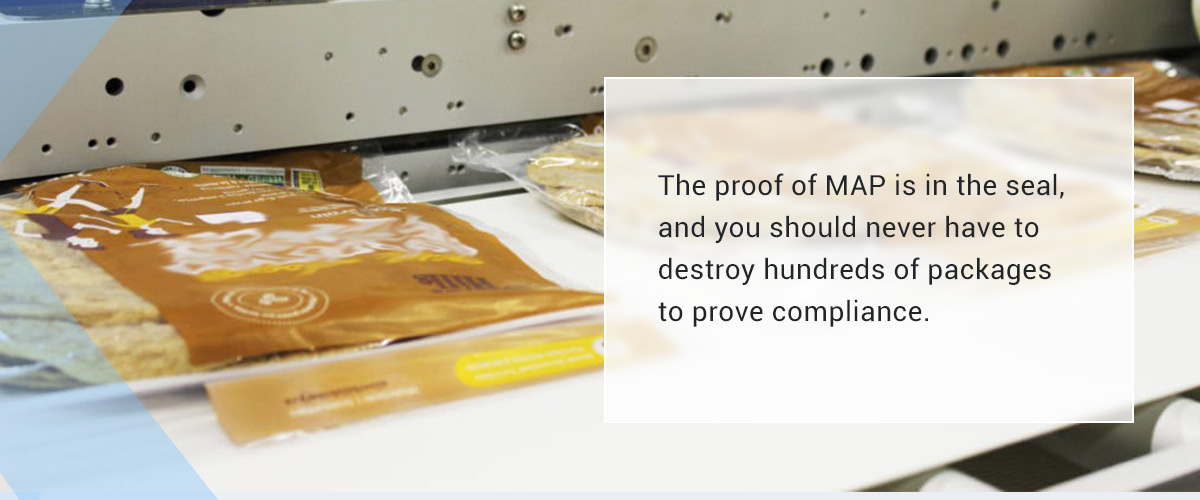
The proof of MAP is in the seal, and you should never have to destroy hundreds of packages to prove compliance. That is where MAP quality control systems and the practice of “validatable sealing” become vital. Every seal's performance hinges on three variables: temperature, pressure and dwell time or speed. If even one variable fluctuates, the package's integrity is in jeopardy.
Modern manufacturers use quality control systems that monitor and log these variables in real time. If the process strays outside predetermined safe zones, alarms trigger and intervention can occur before a problem worsens.
Beyond being a best practice, implementing quality control systems is crucial for meeting many compliance standards in industries like food, pharmaceutical and medical packaging. The Food Safety Modernization Act (FSMA) and ISO standards now require proof that your sealing and package integrity processes are under control, down to the data. Validatable sealing ensures you can provide that certainty every time, for every pack.
The Business Case for Food Solutions: ROI and Market Expansion
Investing in thoughtful, compliant food MAP packaging solutions is about more than risk mitigation. The financial case is also powerful. An extended shelf life translates to longer, larger production runs and less changeover downtime. This newfound flexibility enables you to handle larger purchase orders and meet surges in demand with less stress.
Geographically, MAP also breaks down barriers. With extended reliable shelf life, you can ship to new regions, find new customers and even export with confidence. For example, studies have found that MAP is capable of extending the shelf life of fruits and vegetables by as much as 200%, depending on storage conditions. Lower spoilage rates mean less waste, which can cut costs, protect margins and support your sustainability goals in an era when they matter more than ever.
Another significant benefit is lowered spoilage rates. Less spoilage reduces the hidden costs of unsellable goods and damaged reputation. By consistently delivering high-quality, fresh products, businesses experience fewer returns and stronger customer loyalty. This directly supports their bottom line and strengthens brand promise while supporting certifications that open doors to premium markets or partnerships.
Achieving Certainty With Plexpack's Integrated Solutions
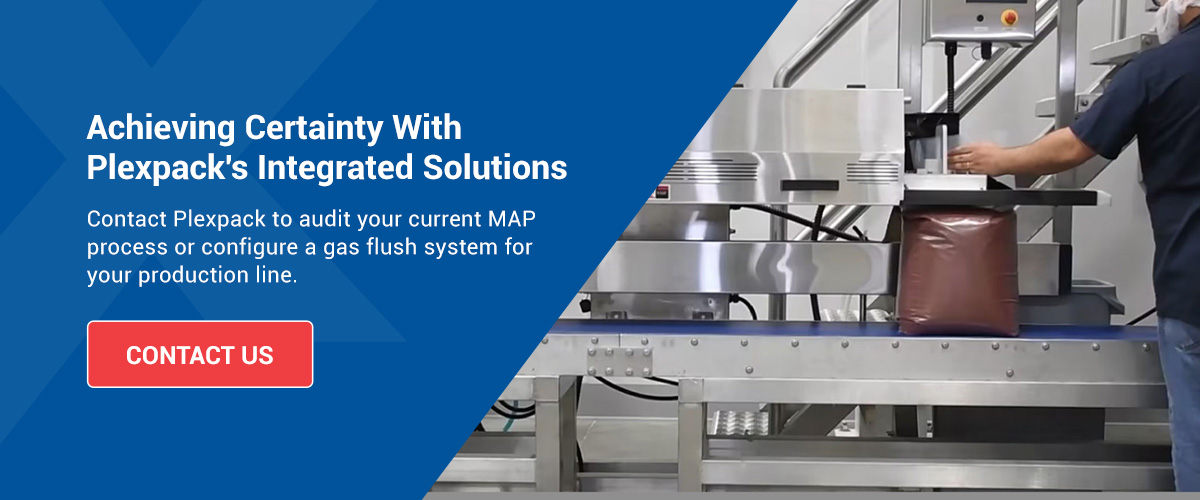
At Plexpack, we have spent decades refining our approach to MAP, focusing on the details that drive both compliance and business results. Our VacPack Series stands as the definitive solution for the second pillar, providing unparalleled control over vacuum and gas flush cycles to meet stringent standards in both industrial and medical sectors.
For Pillar 4, our Emplex Validatable Sealers set the benchmark, embedding real-time, validatable monitoring and data recording to ensure you hit every mark for FSMA and ISO compliance. Our modular approach means you can start with a single, stand-alone unit and scale seamlessly to fully automated lines as your needs grow.
Contact Plexpack to audit your current MAP process or configure a gas flush system for your production line.