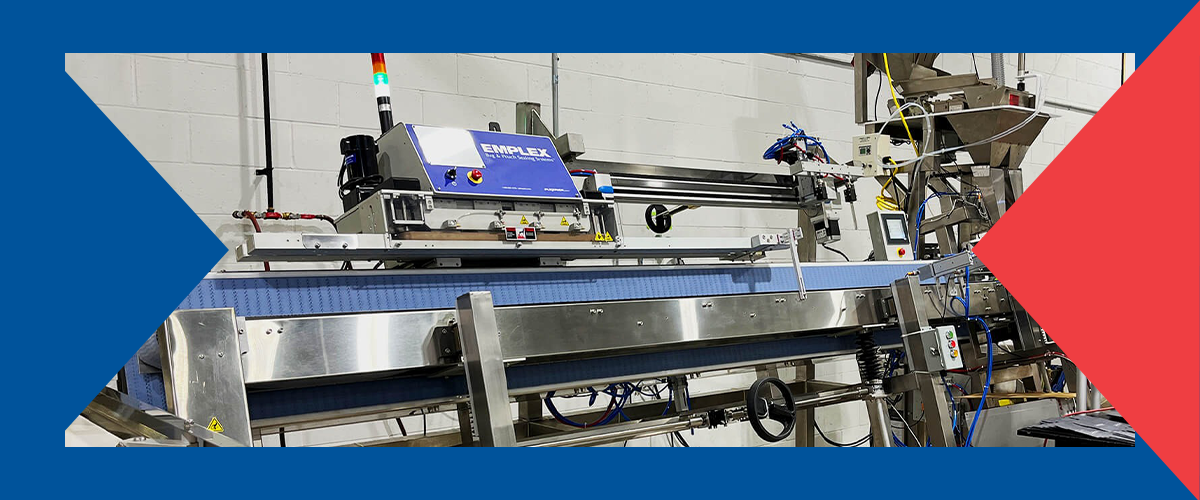
Across high-speed flexible packaging lines, bag misalignment can lead to costly downstream issues. Nowhere is this more evident than at the 90-degree transfer, where product inertia, conveyor acceleration and geometry combine to create a persistent bottleneck in bag alignment. The challenge is to maintain perfect bag orientation and spacing as every pouch races through a right-angle turn toward the sealer.
For manufacturers who operate under stringent food safety and quality mandates, two problems arise. A skewed bag at the seal bar can render product unfit for sale and require extra labor for rework or disposal. Worse, equipment jams from misaligned packaging escalate maintenance costs, diminish overall equipment effectiveness (OEE) and eat into precious production time.
This article explores how vision-based detection and active rejection systems, integrated before the heating bands, can automate quality control and elevate line performance.
Analyzing the Physics of Post-Transfer Misalignment
Understanding the motion dynamics that occur after a 90-degree conveyor transfer is essential. Subtle shifts in bag position can introduce significant challenges, impacting both line efficiency and packaging quality:
- Inertia and friction factors: During a 90-degree conveyor turn, inertia propels lighter bags outward while friction drags heavier bags behind. As bags exit the curve, variable weights and friction coefficients produce inconsistent spacing or cause lead bags to tilt, complicating the downstream sealing process.
- The shingling effect: Deceleration after a transfer can lead to the shingling effect. This situation occurs when bags overlap each other, similar to falling dominoes. For automated sealing equipment, this is unsustainable. The equipment cannot seal shingled bags individually, which halts throughput and requires manual intervention to reestablish the flow.
- Impact on sealer components: Misaligned bags impact product quality and stress machinery. Bags entering the sealer at angles cause uneven wear on bands and sealing bars, shortening their lifespan. The result is increased maintenance frequency and spare part costs, which creates an unsustainable drag on operational budgets.
To counteract these forces, post-transfer bag alignment systems actively manage gap spacing by using sensors and mechanical guides to restore consistent intervals, regardless of conveyor speed variation. This process ensures each bag presents correctly to the sealer.
Implementing 90-Degree Sealer Rejection Technology
Before a bag engages with the sealer, it must pass through a gating process, which involves a high-speed, in-line assessment of its orientation, shape and fill. Gating ensures only properly aligned and filled bags reach the critical heating bands, where sealing integrity is established.
Modern 90-degree sealer rejection technology can identify and physically remove nonconforming packages before they cause a jam or reduce the probability of a good seal. These units typically integrate with existing conveyor systems.
To achieve effective bag rejection, advanced detection methods and precise removal mechanisms must work together. The two pillars of this technology are vision-based detection systems and mechanical rejection mechanisms.
Vision-Based Detection Systems
Automated packaging demands pinpoint accuracy to ensure consistent and reliable sealing. As packaging speeds increase, so does the challenge of detecting subtle bag defects and misalignments that manual inspection would overlook.
Modern manufacturing lines rely on precision technology to monitor each bag's journey to catch potential issues in real time. With innovative detection techniques, companies can safeguard product quality, uphold regulatory standards and minimize costly interruptions before bags ever reach the sealing station.
- Angle detection algorithms: High-speed vision cameras above the conveyor track the leading edge of each bag. Sophisticated angle detection algorithms measure bag orientation and calculate skew in real time to flag non-conforming pouches well before sealing.
- Product presence verification: Complementing angle checks, presence-detecting sensors confirm upright positioning and proper fill level. Empty, folded or poorly loaded bags are less likely to reach the sealer. This is particularly critical in medical or high-value packaging, where underfilled or misoriented bags equate to lost revenue.
- Lighting and contrast: For reliable edge detection, vision systems require consistent lighting. Teams can employ backlighting or high-contrast conveyor belts to ensure the cameras can identify bag boundaries regardless of surface variation or environmental changes. These systems are particularly useful in high-dust environments.
Mechanical Rejection Mechanisms
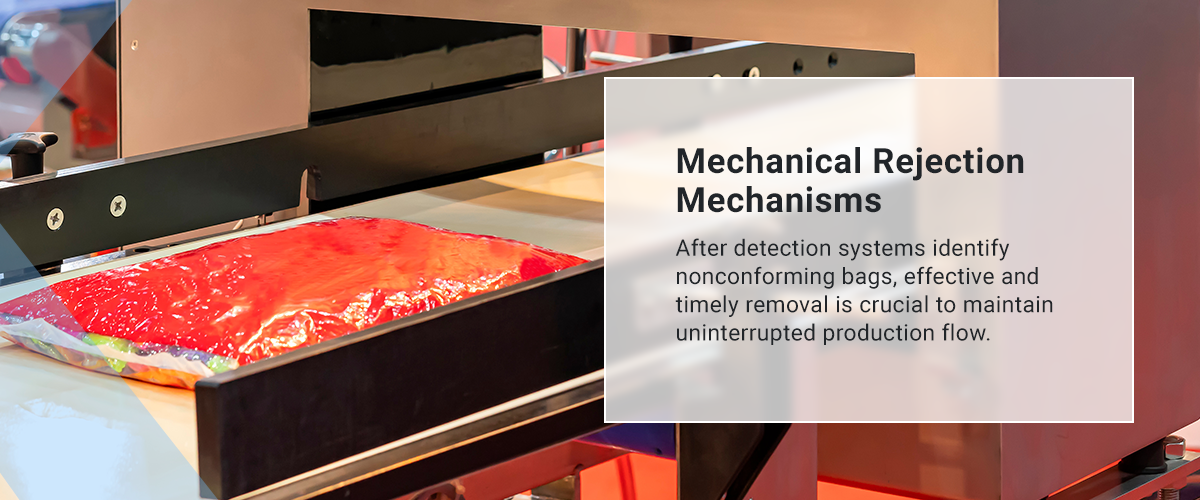
After detection systems identify nonconforming bags, effective and timely removal is crucial to maintain uninterrupted production flow. Mechanical rejection technologies are designed to swiftly extract defective items without slowing the line or requiring manual intervention. These automated solutions are key for maintaining consistent throughput, reducing operator workload and safeguarding downstream equipment.
By using rejection mechanisms, manufacturers can uphold stringent quality standards across a diverse range of product types and packaging formats.
- Air blast systems: For lightweight bags, such as snacks or medical pouches, compressed air jets offer a rapid, non-contact means to reject misaligned product. Strategically positioned nozzles deliver brief, high-force bursts to blow defective packs into dedicated bins to achieve rejection without halting production.
- Pusher and diverter arms: For heavier products, such as frozen foods, pneumatic pusher arms or diverter gates provide the necessary force to reliably remove off-spec bags from the production stream.
- Drop-down conveyors: Retractable, drop-down conveyor sections are ideal for high-throughput operations. These modules lower automatically to redirect rejected products downward, preserving overall line speed and throughput while preventing backlogs or jams.
Control Integration and Line Synchronization
As packaging operations grow more complex, coordination among detection, rejection and sealing components is essential for maximizing performance. Integrating intelligent control and data flow helps the packaging line remain agile, accurate and resilient to disruptions.
Key technologies include:
- PLC communication: The backbone of an advanced rejection system is digital communication. Each rejection module interfaces directly with the sealer's programmable logic controller (PLC), relaying real-time bag status, tracking reject counts and categorizing each failure by root cause for comprehensive reporting.
- Variable speed synchronization: Transfer sealer alignment optimization hinges on precisely matched speed profiles. Variable frequency drives (VFDs) synchronize the transfer and sealer, ensuring smooth handoff and supporting consistent positioning.
- Feedback loops: State-of-the-art systems close the loop by automatically analyzing rejection data. Feedback mechanisms adjust upstream conveyor speeds or guide rail positions to correct persistent misalignment.
Regulatory Implications for Automated Packaging Quality Control
Automation enhances efficiency while playing a pivotal role in meeting compliance requirements. Robust quality control processes help companies proactively address regulatory challenges and protect both consumers and brand reputation.
- Food safety: For food producers, automated rejection acts as an essential critical control point, catching unsealed bags before they advance. This reduces contamination risk, supports food packaging compliance and minimizes costly recalls.
- Medical validation: Sterile medical packaging standards, like ISO 11607, require that all sealing parameters are validatable. Even a single skewed, incompletely sealed pouch is a critical process failure. Teams must detect, log and remove these failures before product release.
- Data logging and traceability: Contemporary automated packaging quality control systems log every rejected bag, recording a timestamp, image and rejection cause. This traceable data trail acts as a quality tool and a compliance necessity, providing ready evidence for ISO 9001:2015 audit trails and root-cause analysis.
Partnering With Plexpack for Line Integration
Advanced vision and rejection systems safeguard product quality, streamline compliance and create measurable savings by boosting OEE and reducing waste.
With Plexpack Corp, you can find the flexible solutions you need to meet packaging challenges. Our automated bagging systems (ABS) increase packaging efficiency with simple integration into your production. The Emplex ABS is easily programmable and integrates operations like sealing, filling, vacuuming and more to meet the needs of various industries.
Do you need help specifying the right automated rejection system for your operation? Consult with an integration specialist to transform your transfer bottlenecks into best-in-class performance.
